November 2026 / ALPINE SKIING/RIDING & CROSS-COUNTRY SKIING
Advanced skiers and instructors getting tips to up their performance. Riley Karl
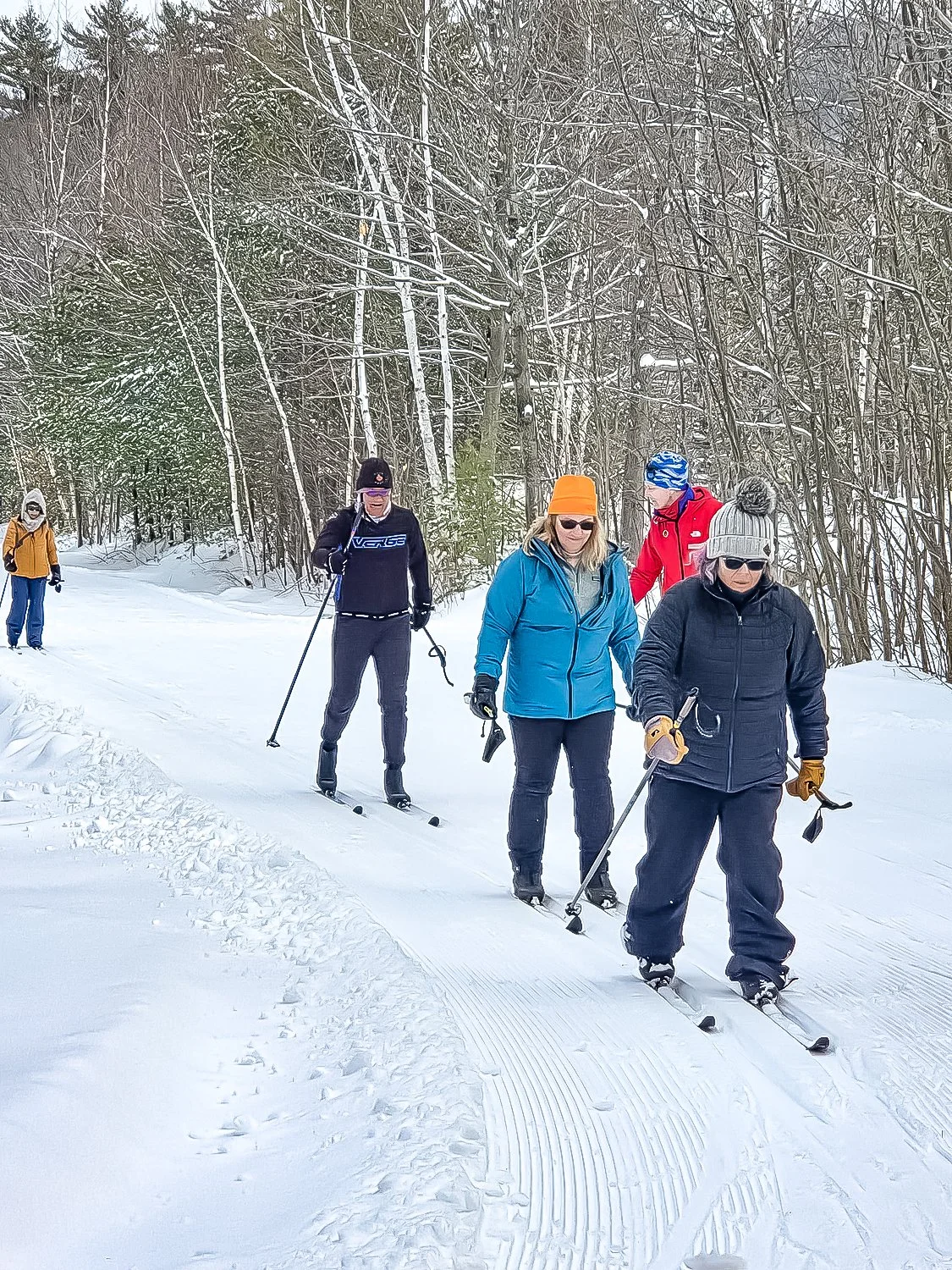
Alpine skiers expanding their skills and knowledge by learning classic cross-country skiing. Kathy Brennan
Your Best Winter Might Start with a Lesson
By Kathy Brennan
Years ago, I taught a season-long adult ski program. Each weekend, I challenged my group with what we called a “stupid human trick.” Sometimes it was a hop turn; sometimes it was skiing on one ski. As the season progressed, so did the challenges.
We laughed at ourselves and worked to master something unfamiliar. Often, those activities took us away from the lift lines. On chilly days, they got us moving and warmed us up. We were busy figuring something out together, with less attention left for the temperature.
But there was a purpose behind the fun. Those challenges interrupted familiar movement patterns, nudged us out of our comfort zones, and made us think about what we were doing. The skills we explored helped us become more adaptable in our everyday skiing.
That is what a good lesson can do: help you discover something that makes your time on snow more rewarding. Whether you ski downhill, snowboard, or explore cross-country trails, there is something to gain at every level.
Starting with confidence – For a beginner, everything can feel unfamiliar: the equipment, the slippery surface, and the prospect of heading downhill. An instructor can help sort through that uncertainty, choose appropriate terrain, and build skills one manageable step at a time.
In a downhill ski lesson, that includes learning to turn and control speed. For snowboarders, understanding how to use the board’s edges to slide, stop, and link turns opens the door to exploring the mountain. Just as valuable is an instructor who recognizes when you need encouragement, a different explanation, or a little more time.
Cross-country skiing deserves the same thoughtful introduction. It may look like walking on snow, but balancing on a gliding ski is a different experience. Learning to move, climb, and manage descents can make an inviting trail feel much more approachable. Instruction also helps distinguish classic skiing’s forward stride from skate skiing’s side-to-side push, with their different techniques and equipment.
Learning how to enjoy being outdoors matters, too. Dressing for the weather, staying active, and sharing an engaging experience with others can change how winter feels. You may discover that a snowy day offers more than a reason to stay inside.
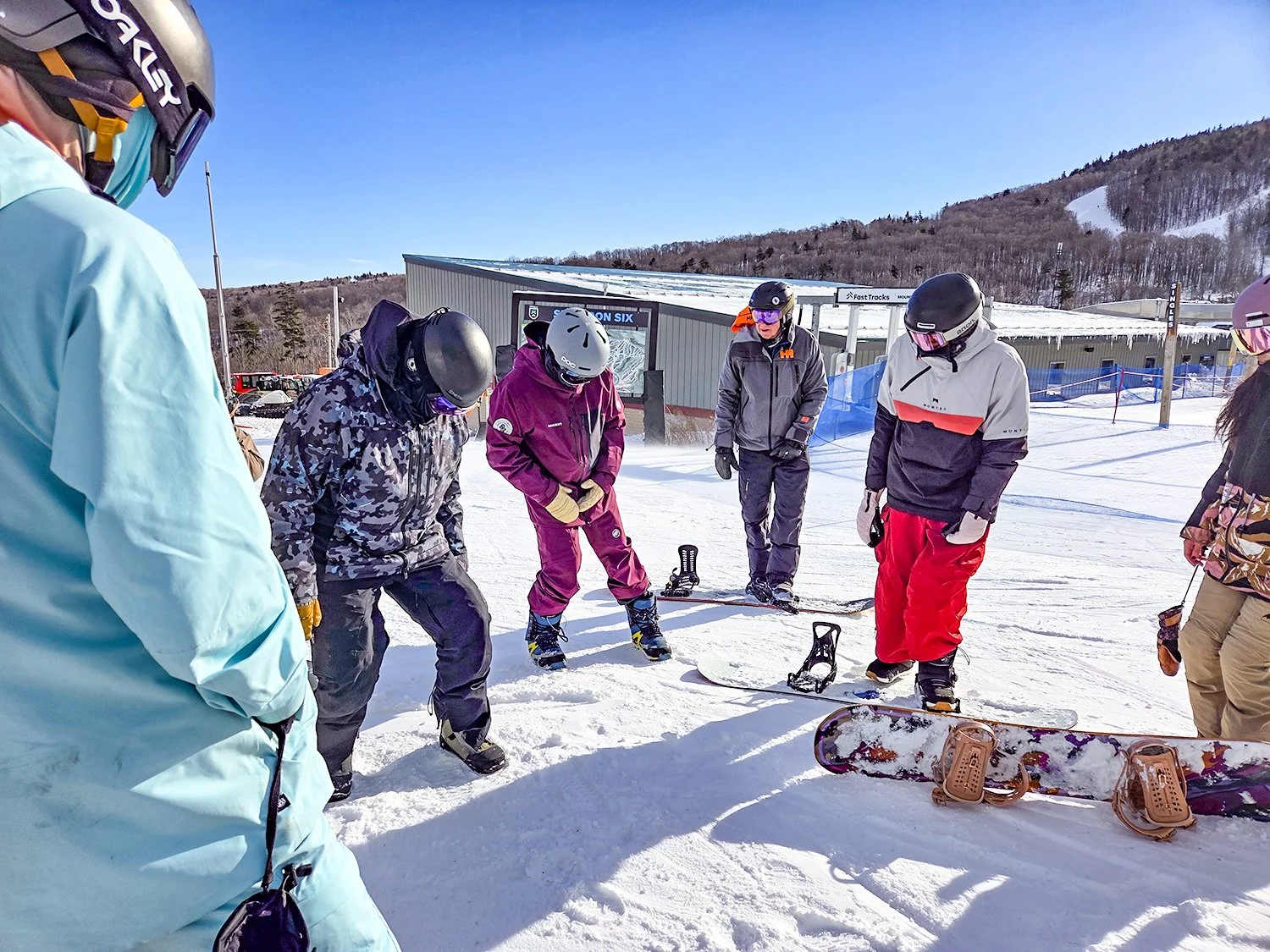
Riders exploring how to improve board performance. Kathy Brennan
Beyond getting down the hill – Perhaps you can already get down the mountain or around a Nordic loop reasonably well. But are you comfortable on the terrain you want to explore? Can you keep up with family and friends without feeling rushed? Are you working harder than you think you should?
We live in a do-it-yourself world, with tips and videos just a click away. Yet it is still difficult to see yourself while skiing or riding. Even cellphone footage leaves a question: what should you look for, and what should you change?
A professional can recognize subtle differences that may escape an untrained eye, such as balance, timing, or how you use your skis or board. Sometimes a few well-chosen tips provide the breakthrough you have been looking for.
For an intermediate downhill skier, that might mean using turn shape more effectively to manage speed. A snowboarder might develop more confidence changing edges or adapting skills as the snow changes. A cross-country skier might improve weight transfer and timing, replacing a shuffling stride with a more satisfying glide.
If aches or discomfort are affecting your enjoyment, mention them to your instructor. While a lesson cannot determine the medical cause of pain, some movement habits create unnecessary strain or effort.
Experts have room to grow, too. Advanced coaching might focus on tactics in bumps, turns on firm snow, or adapting to varied terrain. Experienced Nordic skiers can refine timing and transitions between techniques. Small adjustments can have a substantial impact. And trying another discipline offers even accomplished skiers and riders the pleasure and humility of being beginners again.
Making the investment count – Lessons are an investment, so find an option that fits your goals and budget. Group lessons generally cost less than private instruction and offer shared encouragement. Ask about multiday or multiweek programs, which may provide savings along with continuity and practice between sessions. Private instruction allows more individual attention.
Tell the school what you want to accomplish. “I can ride intermediate trails, but I get nervous on steeper sections” is more useful than an ability label alone. For cross-country skiing, specify classic or skate.
Ask for an instructor certified by PSIA-AASI – the Professional Ski Instructors of America and American Association of Snowboard Instructors – in your chosen discipline. Certification assesses performance, teaching, and people skills. Levels I, II, and III represent progressively broader knowledge and skills, from teaching beginners through working with advanced and expert participants. The school can help match an instructor’s qualifications to your goals.
Ask questions during your lesson. Make sure you are communicating what you need to have a fun and productive lesson. And before leaving, ask for one or two things to practice and where to practice them. Improvement continues after the lesson ends.
I learned that early. As a child, my parents had me in lessons every weekend. Whenever our instructor talked about “anticipation,” my friends and I burst into the song of the same name. I am sure we tested her patience. Sometimes I wonder if every challenging lesson I have had since is payback. But those lessons were fun, they kept me coming back, and I still practice the skills she taught me. As soon as I could, I began teaching. I stayed partly because I loved it, and partly because instructor training gave me regular opportunities to develop my skills and challenge my understanding of the sport.
I still believe there is always more to learn. Sometimes it starts with a tip from a pro. Sometimes it starts with laughing at yourself on one ski. Either way, it can give you another reason to look forward to winter – and help make it your best one yet!
Kathleen Brennan (kbrennan@psia-e.org) is CEO of the Professional Ski Instructors of America and American Association of Snowboard Instructors Eastern Region. A PSIA member for more than 30 years, she supports instructor education and certification that help people enjoy rewarding experiences on snow.